The textile industry, a cornerstone of economies worldwide, is often criticized for its environmental impact. However, the recently concluded Innovative Business Practices and Economic Models in the Textile Value Chain (InTex Project) has demonstrated how innovation and sustainability can reshape this sector.
Funded by the European Union and spearheaded by the United Nations Environment Programme (UNEP), this three-year initiative aimed to foster eco-innovation and circularity in the textile value chain in South Africa, as well as in Kenya and Tunisia.
In South Africa, the National Cleaner Production Centre (NCPC) and the Centre for African Resource Efficiency and Sustainability (CARES) served as local implementing partners.
Launched in 2021, the InTex Project aimed to address critical gaps in policies, business practices, and financial frameworks to promote sustainability across the textile industry. The project concluded in December 2024 with remarkable achievements
The NCPC focused on the project's objective to identify and bridge policy gaps that hinder eco-innovation. Through extensive collaboration with government departments, private stakeholders, and textile federations, InTex proposed updates to local plans and policies such as the Clothing Textile Footwear Leather (CTFL) Masterplan. These recommendations included integrating circularity into national strategies, establishing a digital knowledge hub for sustainability data, and encouraging initiatives like Extended Producer Responsibility (EPR) to boost textile recyclability.
Empowering SMEs for Circular Innovation
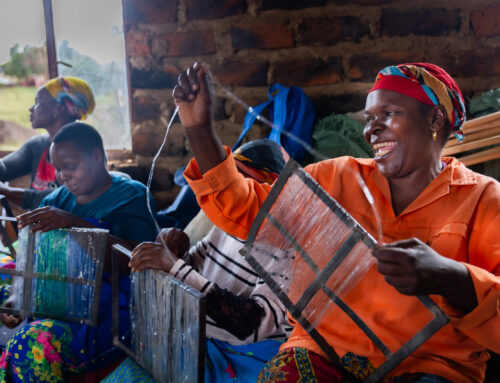
Parallel to the policy work, implementing partner CARES led the firm-level interventions to empower small and medium-sized enterprises (SMEs) to adopt sustainable practices. Ten SMEs across South Africa received technical support to develop eco-innovative business models tailored to their unique challenges. These interventions ranged from implementing renewable energy solutions to adopting environmentally safe dyes and water recycling systems.
These quantifiable impacts underscore how sustainability can coexist with economic growth. During the final project evaluation, participating companies shared how the project has assisted them in achieving some of their sustainability and efficiency improvement goals.
Bobby Fairlamb of K-Way Manufacturers highlighted growth recorded in the project period: "We've grown from producing 25,000 units annually to over 600,000 units while improving efficiency and productivity." K-Way Manufacturers not only repaired over 1,000 jackets but also expanded its workforce from 160 to over 300 employees.
Green Thread Manufacturing saved 53 tonnes of carbon emissions while creating 63 new jobs. "Our company is always looking for ways to improve, and offering sustainable products has become a priority. The project provided another opportunity to stay ahead of the curve," said Carlien van der Vywer of Green Thread.
UNICA Textile Mills saved 24 tonnes of carbon emissions and created 15 new jobs. "The project helped us prioritize sustainability through energy and water management improvements," notes UNICA Textile's Ali Qasim.
Hextex Industries optimised its steam system, saving 130 tonnes of carbon emissions while retaining 108 jobs.
Driving Green Finance
Access to funding is often a significant barrier for SMEs looking to implement sustainable practices. Recognising this challenge, the NCPC hosted workshops to connect SMEs with financial institutions and raise awareness about green financing. These sessions equipped businesses with tools to develop bankable proposals and tap into grants or incentives that reduce investment risks. By bridging the gap between financiers and SMEs, InTex facilitated a smoother transition toward circular business models.
A Legacy of Change
The InTex project has proven that sustainable transformation in Africa's textile industry is both achievable and impactful. By addressing policy gaps, empowering SMEs with technical support, and facilitating access to green finance, this initiative has laid a strong foundation for long-term change. As industries worldwide grapple with climate challenges, projects like InTex serve as a blueprint for integrating sustainability into economic development.
With its conclusion in December 2024, the InTex project leaves behind a legacy of innovation, collaboration, and measurable progress a testament to what can be achieved when environmental stewardship meets economic ambition.