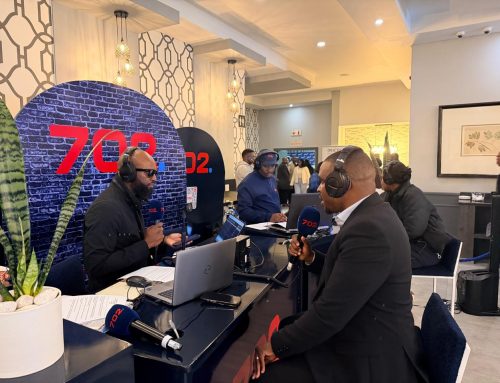
The Sustainable Industrial Spaces Conference, hosted by the National Cleaner Production Centre South Africa at the CSIR ICC on 20 and 21 October, provided a platform for discussion and learning for those leading the transformation of industrial spaces in South Africa. The conference content, attended in person by 100 delegates, is available online to equip industrial parks and zones across South Africa
Of all the instruments for building a competitive, inclusive, and sustainable economy, the eco-industrial park is among the most transformative. This was the message of Mr Maoto Molefane, Special Economic Zones (SEZs) Special Advisor at the Department of Trade, Industry and Competition (the dtic), in his keynote address on 20 October 2025.
Speaking at the Sustainable Industrial Spaces Conference, Molefane said that for many decades, industrial parks have driven regional economic activity – anchoring manufacturing, attracting investment, and providing jobs to thousands of South Africans – but this traditional role is no longer enough.
Director of the NCPC, Ndivhuho Raphulu, committed the NCPC to supporting industrial parks and zones through the journey of decarbonisation and circularity, by means of the NCPC's range of support services, provided through the dtic and the Global Environment Facility funding. Raphulu shared a presentation showing that, since 2015, the NCPC has assisted industry to mitigate 9.2 million tonnes of Greenhouse gases through energy management and waste minimisation.
Just as critical are the skills required to maintain this transition. Since 2012, almost 9700 professionals have been trained in various aspects of resource efficient and cleaner production (RECP), including 420 experts and 307 local trainers. "When the NCPC began training in energy efficiency in 2011, UNIDO was bringing international experts to South Africa to train our companies. Today, we have South African trainers visiting other countries to train them," he shared.
The conference agreed that collaboration and knowledge sharing are key to creating world-class industrial zones that can be sustainable over the long term. To respond to the profound global shifts occasioned by technological change, climate imperatives, and evolving trade dynamics, the South African economy needs industrial parks to evolve into platforms of innovation, incubation hubs for small enterprises, and centres for beneficiation and value addition.
Local success is already achieving global recognition, with the East London Industrial Development Zone (ELIDZ) named by UNIDO as the world's leading eco-industrial park in 2024 – an affirmation that South African industrial policy is globally competitive when supported by sound partnerships and planning.
"If we are to truly transform our industrial landscape, industrial parks must be re-imagined as smart, sustainable ecosystems and spaces where science, technology, and production come together to drive inclusive growth," Molefane said.
Explore the full conference recordings available on the NCPC YouTube channel or follow NCPC on LinkedIn and scroll down to previous page posts to catch up on streamed sessions.